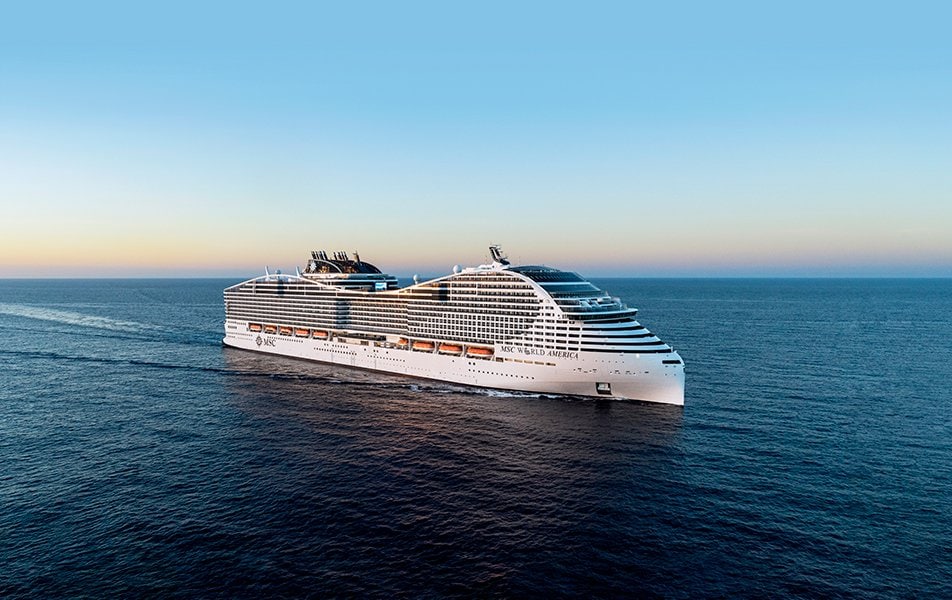
Technology, efficiency and fuels
Innovative approaches to achieve net zero
This section details our efforts to decarbonise fleet operations and minimise air quality impact through advanced technologies, energy efficiency practices, and renewable fuels. We are focused on sustainable strategies that reduce emissions and support a cleaner environment, aligning our operations with broader goals for reducing our carbon footprint and enhancing air quality through innovation and responsible resource use.

2025 AT A GLANCE

42%
Reduction in carbon intensity

9,839
Tonnes of renewable fuels used

3
Dual fuel LNG vessels
ENERGY TRANSITION PLAN
We are committed to our target of net zero greenhouse gas emissions from our marine operations by 2050.
Our Energy Transition Plan sets out our decarbonisation trajectory to 2050 with 5-year interim emissions targets. These targets are set in metric tonnes of carbon dioxide equivalent (tCO₂e) emissions across the full fuel lifecycle, in line with the well-to-wake approach.
To achieve our net-zero goal, we are focusing our effort and resources on three main decarbonisation levers: Ship and Engine Technology, Operational Efficiency and Renewable Fuels.
ENERGY TRANSITION PLAN

RENEWABLE FUELS
Renewable and lower-emissions fuels are an important part of our decarbonisation strategy.
Liquified natural gas (LNG) is used as a transitional fuel. Depending on engine type, operating conditions and how emissions are measured, LNG can reduce greenhouse emissions compared with conventional marine fuels. It can also reduce local air pollutants, including sulphur oxides, nitrogen oxides and particulate emissions.
Our dual-fuel LNG engines allow the use of drop-in bio-LNG and synthetic renewable LNG which can further reduce well-to-wake greenhouse gas emissions by more than 80%.
We acknowledge that methane slip from Liquefied Natural Gas fuelled ships requires attention. We are actively working to reduce this by working closely with engine manufacturers and other organisations, including looking at new engine designs and how those engines operate.
RENEWABLE FUELS

SHIP DESIGN ENGINE TECHNOLOGY AND FUEL
To achieve our net zero emissions target we need to use fuel from renewable sources.
Fuels from renewable sources can emit significantly less greenhouse gases compared to fossil fuels throughout their lifecycle. By replacing fossil fuels with renewables, we reduce the amount of carbon dioxide and other greenhouse gases, which is essential for combating climate change and meeting global climate targets.
While renewable fuels exist, they need to be commercially viable, both from an availability and cost perspective. A concerted joint effort is required from energy providers, governments, shipbuilders, non-government organisations (NGOs), and other public and private organisations to create the right infrastructure and scale for renewables.
We believe that a combination of different technologies and fuels will be needed to achieve net zero. As such we are investing in research and development, in ship design, improving energy efficiency and other key technologies such as fuel cell innovation.
As we transition towards renewable fuels, we need to ensure we maintain flexibility during this period. Our news ships incorporate fuel flexible engine technology to operate on conventional fuels and LNG, to help in the transitional period as renewable fuels become available.
Fossil LNG offers immediate benefits compared to conventional maritime fuels by reducing greenhouse emissions by up to 20% (CO2e Well to Wake) while also substantially reducing local air emissions (99% less sulphur oxides (SOx) and 99% particulate emissions and up to 85% less nitrogen oxides (NOx). It is a fuel in transition that enables the use of drop-in bio-LNG and synthetic renewable LNG which can further reduce well-to-wake greenhouse gas emissions by more than 80%.
We acknowledge that methane slip from Liquefied Natural Gas fuelled ships requires attention. We are actively working to reduce this by working closely with engine manufacturers and other organisations, including looking at new engine designs and how those engines operate. Recent independent studies have already recorded significant reductions in methane slip from the latest generation duel fuelled engines on our LNG vessels. Learn more
MSC Euribia Net Zero Voyage
In June 2023, our flagship vessel, MSC Euribia, achieved the world’s first net zero-emission cruise on her maiden journey from St. Nazaire, France, to Copenhagen, Denmark.
MSC Euribia achieved this milestone by utilising bio-LNG and applying mass balance. During the four-day voyage, MSC Euribia performed 11% better than her digital twin – a virtual ship reproducing the optimum energy flow and utilisation on board - achieving an overall saving of 43 tonnes of fuel. Optimal speed profiles, routing, trim and engine configuration, and strict optimisation of the hotel`s energy consumption, including HVAC, galleys, and lightings, ensured that MSC Euribia never had to use more than two of its four engines available during the voyage. In addition, all the required heat for galleys, heating systems and hot water on board was recovered from MSC Euribia’s engines, meaning there was no need to utilise the boilers for the entire voyage. Achieving net-zero performance was made possible by using bio-LNG as a fuel.
SHIP DESIGN ENGINE TECHNOLOGY AND FUEL

ENERGY EFFICIENCY
Energy efficiency is an essential element of our drive to reduce greenhouse gas emissions. Initiatives include installing LED lighting, heat recovery systems, anti-fouling paint that reduces drag, sailing at lower speeds, and optimising the ship's trim (balance).
Operating the heating, ventilation and cooling systems is one of the most energy-intensive operations on board. We maximise energy-efficiency through self-adjusting heating, ventilation and air conditioning systems, influenced by numerous sensors installed thought the ship.
As a result of our energy-saving efforts, we have been certified to ISO 50001. We are on track to achieve the industry’s 40% carbon intensity reduction goal, well ahead of the 2030 target. ISO 50001 outlines the requirements for establishing, implementing, maintaining, and improving an energy management system. This enables us to follow a systematic approach in achieving continual improvement of energy performance, including energy efficiency, use, and consumption.
Shore power
As an important part of our strategy to lower emissions, and reduce potential pollution at destinations we visit, we have fitted shore power capability as standard on all our ships since 2017 and have a retrofit program for older vessels. This allows our ships to plug into a port's electrical grid at berth and shut down the vessel's engines. Using shore power benefits port areas and local communities by significantly reducing air pollution from docked ships, which otherwise would burn fuel for power.
Additionally, it lessens noise pollution, creating a quieter environment. Shore power also supports local energy markets and can reduce greenhouse gas emissions, contributing to efforts against climate change.
By the end of 2024, nearly 70% of our fleet will have shore power capability, and we are working closely with ports and local authorities to ensure sufficient infrastructure onshore. We recently signed an agreement with Cruise Baltic to access shore power in the Baltic Sea region and look forward to further agreements worldwide. The design of our new passenger terminals in Barcelona and Miami includes shore power infrastructure. The challenges we currently face is the limited availability of shore power, but we will always use it whenever it is available to us.
Digitalisation
Digital technologies can help us achieve further significant energy-efficiency savings. In 2024 we rolled out a new cruise itinerary optimisation tool – OptiCruise – to enable efficiency measures to be incorporated into the itinerary planning process. Now, when new itineraries are planned, several years before they happen, this model allows many factors that influence an itinerary’s efficiency, including sequencing of the port calls, departure and arrival times at ports, a ship’s speed, the appeal and attractiveness of destinations for a holidaymaker, shore excursions, and operational costs such as fuel, port charges and food provisions to be taken into account in developing the detailed schedules.
Additionally, we use an energy monitoring system onboard all our ships. Oceanly Performance collects and analyses thousands of data points from shipboard operations, allowing continual adjustment to be made to improve overall efficiency.
ENERGY EFFICIENCY